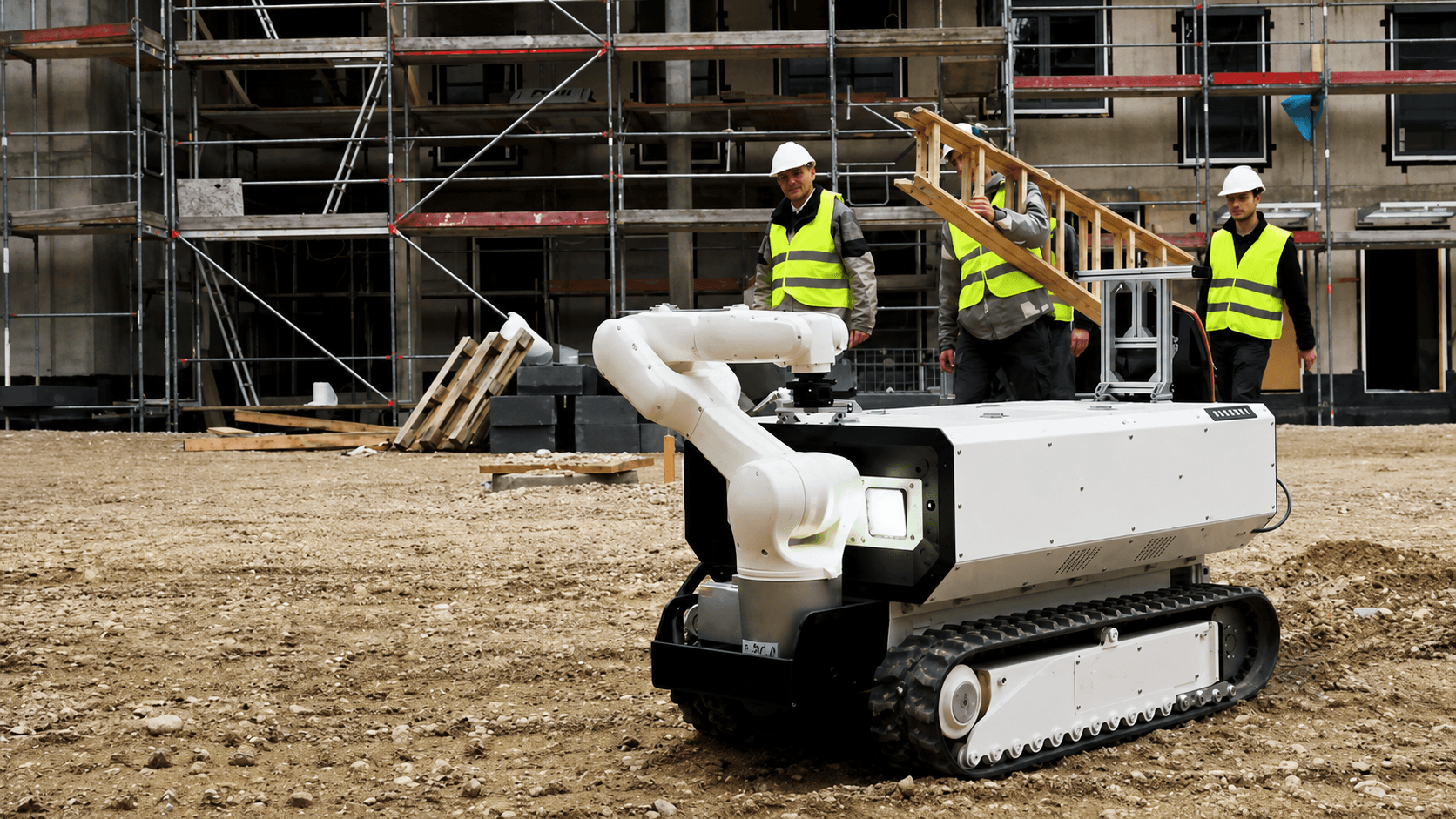
Construction seems like an obvious industry for robots until you actually look at a construction site. The environment changes constantly. Materials move. Surfaces are unfinished. People work around one another. Weather happens. The beautiful flat floor from the robotics demo may not exist yet because, technically, that is what everyone is there to build.
That makes construction much harder to automate than a factory, but it also makes the useful opportunities more interesting. The industry contains repetitive, physically demanding, hazardous, and measurement-heavy tasks where a machine does not need to replace an entire trade to create value.
The realistic near-term story is not one humanoid building an apartment tower by itself. It is specialized machines taking on specific pieces of the workflow while skilled workers handle the parts that require judgment, flexibility, coordination, and experience.
Specialized jobs are where robots earn trust
Some of the most practical construction robots focus on layout, surveying, inspection, material movement, repetitive installation, demolition, site monitoring, or forms of fabrication. Those jobs are narrow enough that performance can be measured and the robot can be evaluated against an existing process.
Heavy and repetitive work is an obvious target. If a machine reduces how often workers need to carry material, enter dangerous spaces, repeat the same motion hundreds of times, or walk a huge site collecting the same data, that can create value without pretending the entire job has been automated.
The economics will vary by project. A robot that saves two hours on one site may not matter. A machine that performs the same repetitive task across a large portfolio of projects could be much more compelling. Construction robotics has to be evaluated around frequency, labor availability, safety, schedule impact, and the cost of mistakes.
Reliability matters more than spectacle. A machine that works beautifully during a vendor demonstration but struggles with dust, rough ground, rain, temporary ramps, or changing layouts is not ready for the jobsite.
Autonomy gets harder when yesterday's map is already wrong
Factories are often designed around automation. Construction sites are temporary environments that transform every day. Yesterday's route may literally have a wall in it today. That means robots need strong perception, navigation, and ways to recover when reality no longer matches the plan.
Human coordination is just as important. Robots have to operate around crews, equipment, deliveries, and changing schedules. The machine does not need to understand the entire project, but the deployment team needs a clear plan for where it operates, who supervises it, how people interact with it, and what happens when it stops.
This is also why rental and project-based access may make sense for some construction use cases. A contractor may need a specialized robot intensely during one phase of a project and not need it at all during another. Flexible access can be more practical than owning a machine that spends long periods idle.
RobotifyX can help by organizing the category around actual jobs: inspection robots, layout systems, material-moving platforms, demolition machines, quadrupeds, and other specialized hardware. Contractors should be able to start with the task and work backward to the robot.
Construction does not need one machine that can build the entire building. It needs enough machines that can each make individual jobs safer, faster, or easier. That is a much less cinematic vision, but it is also the one most likely to happen.
The marketplace to buy, rent, and hire robots.
Discover robotics systems and services across industries, capabilities, and real-world applications.
Explore RobotifyX