When people imagine robots taking over the world, they usually picture humanoids walking through cities. Meanwhile, some of the most practical robotics opportunities are quietly sitting in fields. Agriculture combines repetitive physical labor, huge operating areas, narrow timing windows, unpredictable conditions, and increasing pressure to produce more efficiently. That is a pretty good recipe for automation.
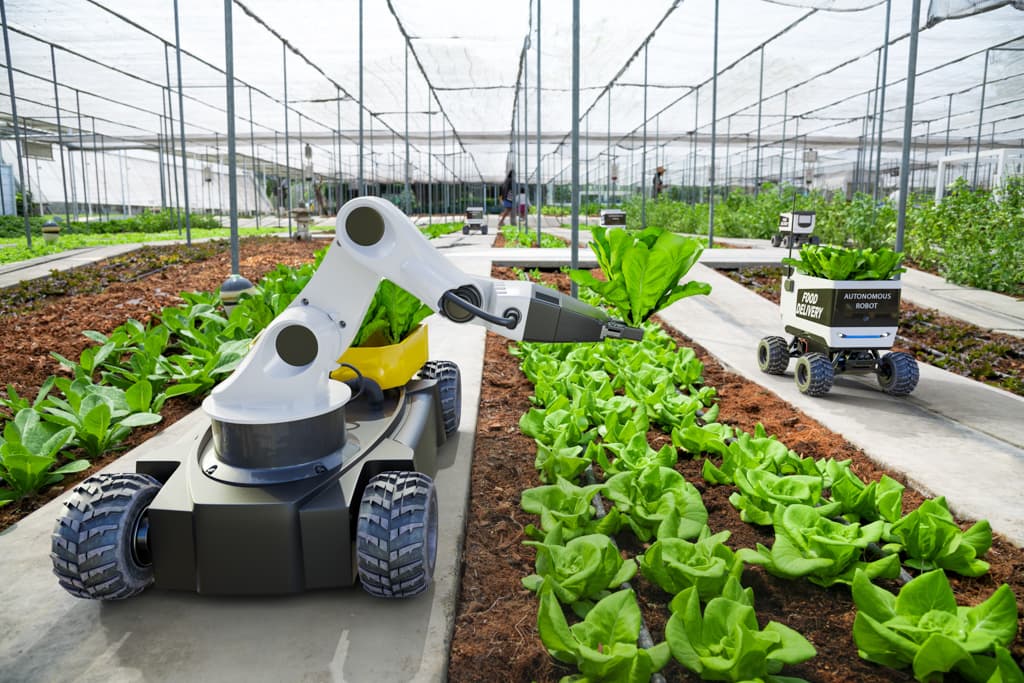
The interesting part is that agricultural robotics rarely looks like science fiction. A useful farm robot may be an autonomous tractor, a compact rover, a drone, a specialized harvesting machine, or a platform carrying cameras and sensors. The shape matters less than whether the machine can reliably perform a job outdoors.
That distinction is important because agriculture is one of the least forgiving environments you can give a robot. Dirt, rain, heat, uneven terrain, dust, mud, plants, animals, and enormous distances do not care how smooth the indoor demo looked.
Precision is where the economics get interesting
One of the biggest advantages of combining robotics with better sensing is the ability to treat a field less like one giant uniform surface. A machine can potentially identify what is happening at a much more granular level: which plants need attention, where weeds are emerging, where conditions are changing, or where intervention is actually necessary.
That can change how inputs are used. Instead of applying the same treatment everywhere, a robotic or autonomous system can help target specific areas. In some cases the value is labor reduction. In others it is better timing, more consistent inspection, lower chemical use, or simply collecting data at a scale that would be difficult for people to maintain manually.
Agriculture also contains many jobs that are repetitive and physically demanding. Monitoring fields, moving materials, spraying, weeding, harvesting certain crops, and inspecting plants can all create opportunities for specialized automation.
The key word is specialized. The near-term future is probably not one humanoid farmer doing everything. It is a collection of machines designed around particular jobs, each earning its place by doing one thing reliably.
Farm robots have to survive reality
The environment makes deployment difficult. A machine has to deal with changing weather, rough ground, weak connectivity, long distances, seasonal work, and equipment that may already be part of a complex farm operation. That makes integration just as important as autonomy.
Serviceability matters too. If a robot breaks in the middle of a narrow planting or harvest window, the cost is not simply the repair bill. The lost time may be the larger problem. Buyers therefore need to look at support, spare parts, field repair, reliability, and how quickly the system can be recovered when something goes wrong.
This is another category where flexible access could become valuable. Some agricultural tasks are seasonal. A farm may need a particular capability intensively for a few weeks and then not again for months. In those cases, rental or shared access models can make more sense than permanent ownership.
RobotifyX can help by making agricultural robotics easier to discover and compare across use cases. A grower looking for crop monitoring has very different requirements from one looking for autonomous mowing, spraying, or material movement.
Agriculture does not need robots because farming is easy to automate. It needs them precisely because farming is hard. The machines that succeed will not be the ones that look most futuristic. They will be the ones that quietly survive the field and keep doing useful work.
The marketplace to buy, rent, and hire robots.
Discover robotics systems and services across industries, capabilities, and real-world applications.
Explore RobotifyX